


The Chronicles Of Erinoth
Tales from a Dying World
Erinoth, the emerald sanctuary
When the Celestials first came to the young world they drove out the eldritch monsters that ruled the surface and established a verdant paradise, an escape from the darkness they had fled in the heavenly realm. For an age they ruled their new home in peace; raising great cities and monuments, and crafting unsurpassed works of art and culture. The sentient races that had called Erinoth home before their coming, now free of the corrupting power of the Old Gods, quietly coexisted with the Celestials and learned from them, giving rise to a golden age of civilisation.
This utopian dream would eventually crumble with the return of the Old Gods, for they were beings of insatiable malice who sought only domination over the living and vengeance against the Celestials. The conflict that followed was catastrophic, and although the gods were once again defeated the destruction they wrought would lay low the great nations of Erinoth and begin a slow decay of the very world itself.
Erinoth is a dying world; its light is fading, its peoples are divided by petty rivalries, and all the while it is coveted by devotees of dark gods who wish to bring about a new age of nightmares.
The Factions
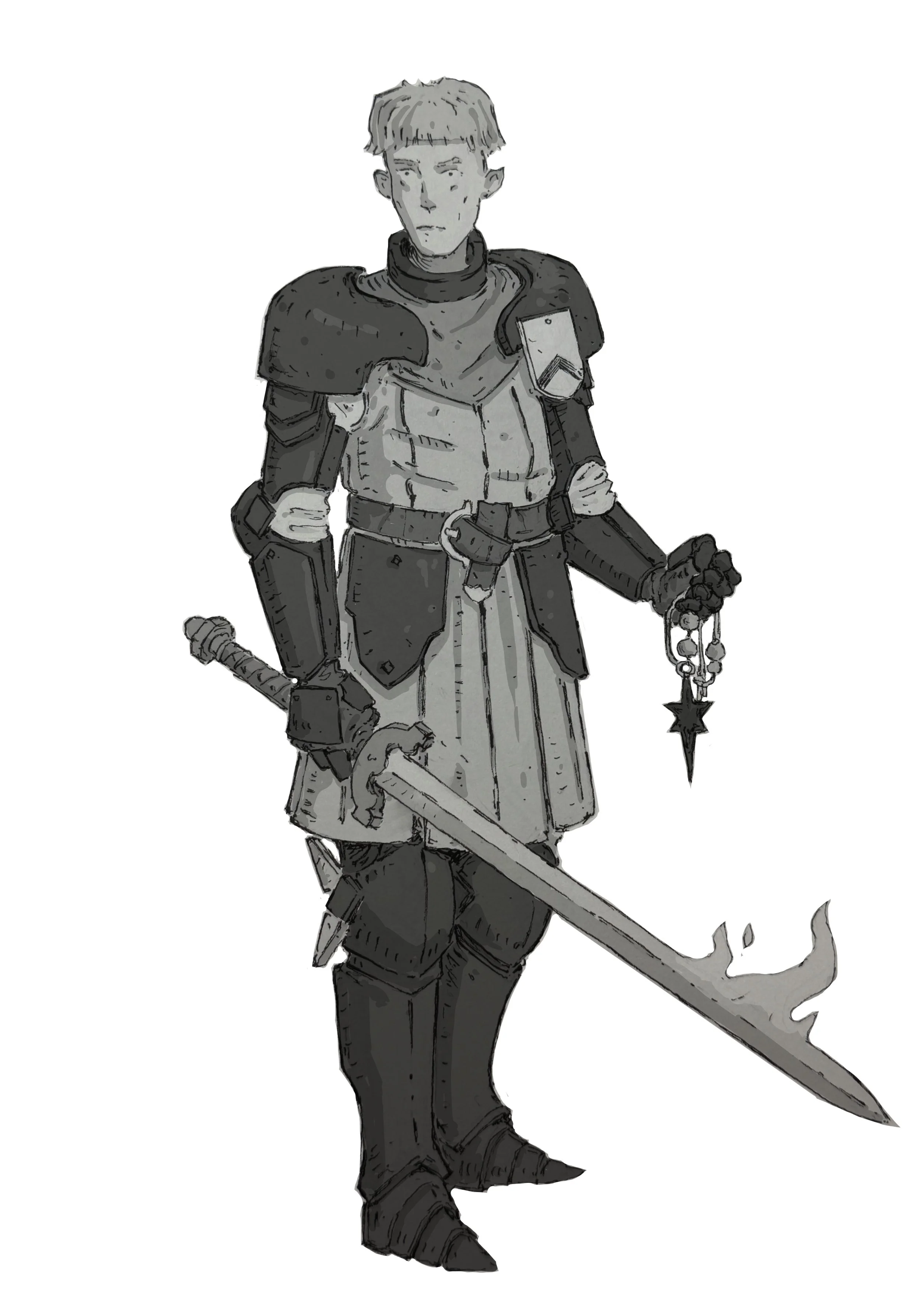
The Knights of the Ebon Star
Ancient order sworn to combat the darkness
All is not yet lost however, for in this chaotic final age of a forsaken paradise, Erinoth is not without its defenders. For 1500 years the knights of the Ebon Star have waged a relentless war in the shadows against the devotees of the old gods, combating their foul spawn and degenerate cults wherever they emerge.
Founded by the Celestial prince, lord Aelmir, the order is sworn to the service of all peoples, pursuing and destroying any who would see the balance of the world thrown back into chaos. By the very nature of what has been aptly named ‘the endless hunt’ they are privy to the worst of the horrors that dwell in the dark, facing them without equivocation again and again. The work of the order is never ending and thankless - for it is their solemn duty to root out and eradicate the servants of evil no matter the cost.
The Ebon Star once ably maintained vast numbers of knights, and even greater numbers of retainers and men at arms to aid them. However, through both external political opposition and the relentless toll of their work their numbers have been ground down, and today there are little over two thousand active knights serving across every corner of Erinoth.
To make matters worse the last three years have seen the order become rapidly more embroiled in a continental conflict that shows no signs of relenting, policing and containing the use of increasingly dangerous occultist powers by factions desperate to tip the balance of war. Despite all the challenges they face they are as implacable in their duty as ever, yet the continual strain on their resources is becoming apparent and the consequences of their failures more terrible.
Knights
The ranks of the order comprise mostly of Men-at-Arms and support staff, without whose vital contributions the endless hunt would have long since failed, but the knights themselves are still the strength and the bulwark against which the darkness breaks. To become a knight is a difficult challenge, testing not only the aspirants physical ability but their mental strength, power, and resilience.
Paladins
Foremost, and most numerous amongst the knights, are the Paladins. The founding members of the order were the first to bear this title, and it is they who initially bore arms against the old gods in their earliest conflicts - to this day, to be selected to join their ranks is a great honour.
The role of the modern paladin is one of investigator and eradicator in equal parts. Their intuitive and relentless natures aiding them in hunting down and eliminating the foulest and most dangerous of the servants of the old gods.
Symbolic of the founding thirteen, Paladins still favour the use of blades - single or double handed, paired, curved, or single edged, to the paladin a blade is a blade, and it is the weapon of the light. Their swords are forged by the artificers of the order to the highest specifications, arcane inscriptions and wards folded into the meteoric steel at every turn of their creation. This meticulous and closely guarded process results in weapons far beyond the abilities of regular armourers, necessary in their fight against the eldritch and occult.
Clerics
When more subtle or political means are required the order calls upon its spiritual and philosophical guides; the Clerics. Whilst still ferocious warriors and shrewd detectives, clerics are most at home dealing with the legalities and specificities of occult offences. It is they who pronounce verdicts of guilt or offer clemency, from the smallest to largest and most complex of inquests, and are often found alongside other knights aiding them in navigating the perilous political landscapes they operate in.
Their duty is also one of spiritual guidance and care. The horrors of the endless dark are enough to turn the minds of the strongest of warriors given time, and the toll their calling places upon both knights and their supporters is overwhelming. Clerics offer both pastoral care and battlefield support to their colleagues, revitalising mind and body and laying low adversaries of the light with maces and words of iron.
Arcanists
Strength of arms and heart is not enough to oppose the old gods and their blight, the arcane forces of the world must be harnessed alongside them if the Ebon Star is to prevail. The arcanists of the order have, since its earliest days, wielded the etheric power of the light to devastating effect in battle, their unique understanding of the living magic of Erinoth allowing them to perform incredible feats.
In the field Arcanists can most commonly be found hunting down and nullifying sources of eldritch or arcane power, either in support of other knights or at the head of their own investigations. They are the last word in all aspects of the etheric and magical within the order and it is common to find them attached to watch citadels and inquests as advisors and researchers.
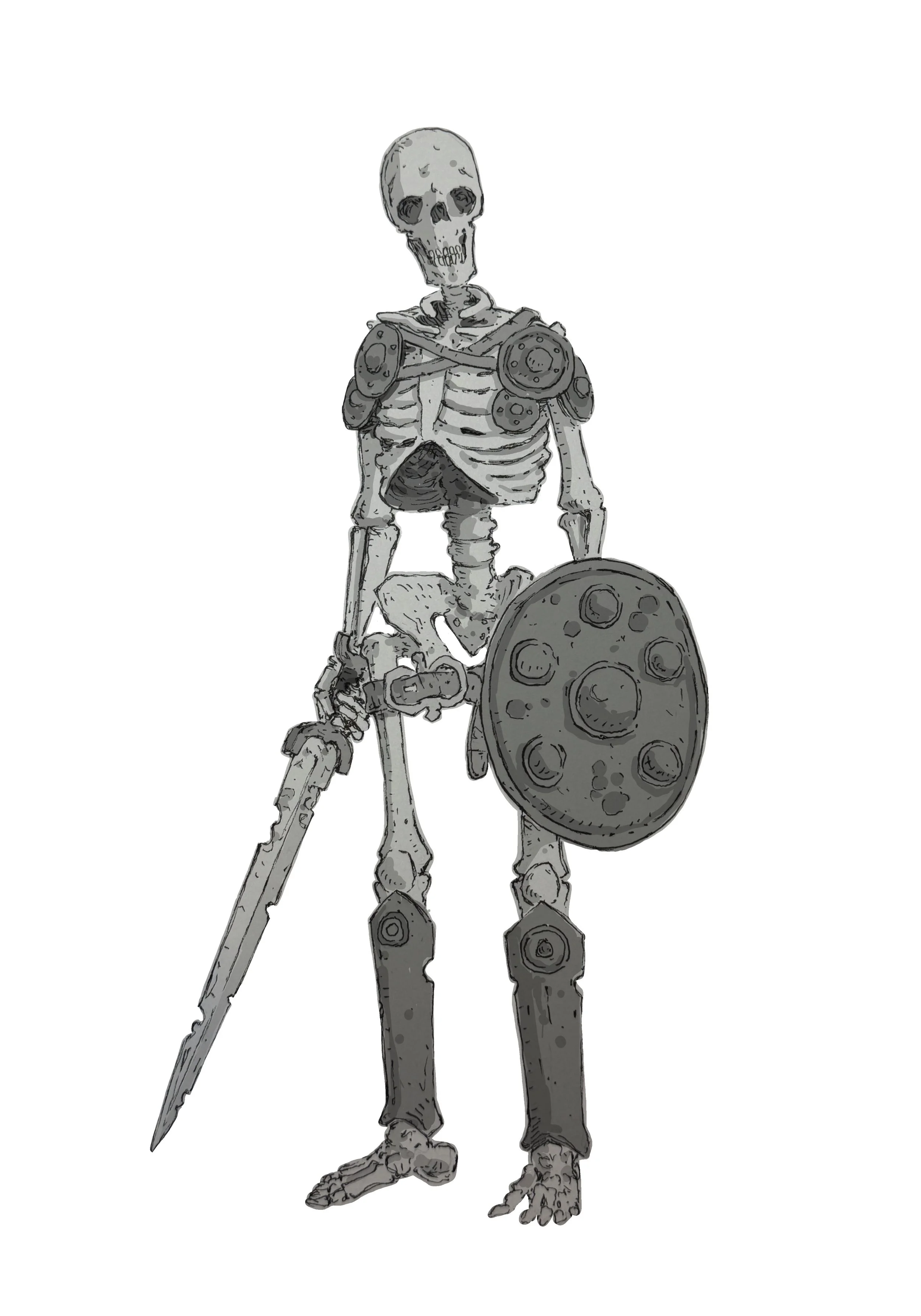
The Risen Kingdoms
The first Men of Erinoth rise again.
In the darkened day before the coming of the celestials the first humans were little more than chattel to the Eldritch nightmares that ruled the world. It was they that first proclaimed them gods, and they prostrated themselves before unholy altars in worship of their masters, committing acts of savagery and profane rites to appease the Old Gods.
When the new age dawned, and the Light came to Erinoth, there were those amongst the human kingdoms that arose for whom the old ways were not easily forgotten. Outside the shadows and influence of the Khal and Erinarii empires the worship of the defeated old gods endured. Whether born of fear or loyalty, paganistic religions worshiping the lost gods dominated the northern peoples, their former oppressors rendered down to votive figures of shadow and fear - symbols of the fickleness and oftentimes cruelty of the world around them.
Whilst much of Erinoth knew relative peace during this time, these early kingdoms warred with one another incessantly, giving rise to a brutal but powerful warrior culture and, through the worship of their gods, a veneration of death and the promise of immortal glory. Mortuary cults arose and obsessive and elaborate funerary practices began to dominate their culture. Great ossuaries were carved into the mountains and hills where the noble dead and warrior elite of the old kingdoms were interred, beddecked in the regalia of war to await a future where they could once again rise and serve their gods. Vast fields of barrows were raised around them to house entire courts of retainers and aids to serve the dead kingdoms - all now forgotten and buried beneath the weight of time and the fading of memory.
When the dark queen Atro’esh, greatest of the Old Gods, returned and waged her terrible war against the Erinarii, the old kingdoms rallied to her side, rejoicing to see their god returned. They, like their monstrous queen, were eventually defeated and their kingdoms laid low. The vengeful Erinarii empire and their allies scourged the corrupted kingdoms, tearing down their cities and temples and driving the survivors into the hills and plains of the wild north. In time all that remained of the old kingdoms were the barren hills and fading memories.
That is, all that remained above the earth. For beneath the green hills and cold mountains, the great ossuaries have lain untouched for well over a thousand years. Within their haunted and dank chambers lie the remains of great legions of ancient dead, and they do not rest easy.
The awakening of the old kingdoms may well spell doom for those that now call their lands home, and the thinly stretched Ebon Star will be hard pressed to contain this new threat.
Cults of the Devoted
Insidious devotees to the Old Gods
“They have existed since the first of all things existed. Since the moment the cosmos was born, They were there, in the shadows, in the dark places, waiting, planning, and They shall be there at the ultimate end of all things, an end They shall conceive of and bring about! For it is their indomitable will that nothing but They shall have power” - unnamed prisoner interrogated by the Ebon Star c.1123
It has been close to fifteen hundred years since Aelmir destroyed Atro’esh, the last of the great Old Gods, and in that time few of their lesser kind have arisen to any significant prominence, save in the early days. However, despite their absence the veracity of their followers has never diminished, nor the rate at which seemingly rational minds succumb to their allure.
Across the breadth of Erinoth dark cults lie in wait, corrupting the minds of peasant and noble alike, and festering within the heart of great civilisations like a malignant cancer.
What that allure is exactly has long been a topic of debate amongst the clerics and academics of the Ebon Star. In their minds the old gods offer only servitude and inevitable death, yet the endless numbers of their followers who have been put to the blade since the order’s founding are grim testament to a greater appeal.
To some it may be as simple as a misguided dream of freedom from the oppressions and drudgery of their lives, to others a chance to claim power, or even glory, in the name of a more capricious and seemingly rewarding patron. Many, according to the Ebon Star’s tribunals, seem to have succumbed to corrupting influences and have been lost in mind and body long before their capture or death, little more than puppets clinging on to faded shreds of humanity.
Few, if any, devotees of the old gods work alone, not for any length of time at least. They gather together in one another manifestation of a sect, society, or cult, preached to and ruled over by the demagogues and prophets of their hateful deity figure. These cults take many forms, and no level or station within modern society is ever safe from their touch. Corrupted Esoteric clubs and masonic lodges insinuate themselves into the upper tiers, presenting their subversive gospels as lurid curiosity to bored entitled minds, eager for escape from the stifling stricture of their class. At the other end of the scale demagogues preach to the most oppressed and vulnerable in society, masquerading as preachers, missionaries, and aid workers; recruiting through alms houses, back water taverns, and overcrowded city streets, or simply appealing to the desperation of the destitute in darkened side allies and forgotten places.
No matter where, or how, the cults emerge they pursue one goal; the furthering of their patron’s agender and the wider dream of a new age of darkness. This often brings them into conflict with rival, or even connected, cults and it is perhaps lucky that they do, for without this internecine conflict many would grow too powerful for the beleaguered Ebon Star to stop.
In these darkening days the servants of the old gods are not the only threat growing in power. Deep within the ancient mortuaries, spectres of the first age stir… but that is a tale for another time.

Peoples of Erinoth
-
Erinarii
Descendants of the Celestarii who came to Erinoth millennia ago, the Erinarii have persevered through the innumerable hardships their adopted world has presented them with.
Though much changed by the trials of their time on Erinoth, and forever altered by their prior indulgence of the mortuary cults and their technology, they are still as wise, capricious and self assured as their original stella forebears were.
Possessed of long lives and an affinity for the Living Light, they have crafted a powerful and proud civilisation, striving against its inevitable decline in the dying years.
-
Aelmarii
During the decedant height, and subsequent collapse, of the first Erinarii empire there were those who repudiated the increasingly indulgent and technologically reliant society they found themselves in.
The mortuary cults especially were point of tension between the increasingly fragmenting Erinarii, and despite their ending at the close of the war, those who had long opposed them found themselves feeling estranged from their former kin. This new subsect of society chose to follow the God King Aelmir in his self imposed exile and would eventually settle in Valindor in Erinoth’s North east, over time forming a unique culture and people of their own, though one still intrinsically linked to their southern cousins.
-
The Khal
The Khal believe themselves to have been raised up from the beasts of the land by the Khalathas the Wanderer, one of the great gods of the cosmos who first shaped Erinoth’s abundant nature.
To what extent this is true is impossible to ascertain, lost to the long aeons of the past, but what is certain is that the old Khal empire held great reverence for the living world and its natural order. They saw themselves as guardians and protectors, charged with keeping the balance of Erinoth. This perceived duty lead to tension between the newly arrived Erinarii and the fledgling empire.
It was no petty quarrel or cheap conflict however, that spelled doom for their people. No, In fact the Khal would set aside their differences during the first war and fight against the Old Gods that had for so long terrorised their world. Instead it was this, and the subsequent rise of their empire, that would see them twisted, manipulated, and used as pawns by the Old Gods to wage war against the Erinarii civilisation.
Now they are a bleak shadow of their former glory, awaiting a chance to regain their status.
-
Humanity
When the Celestarii first descended to Erinoth, they found the nascent human race little more than feral clans, warring amongst each other in service to the Old Gods.
Such was the disruption they caused, and so rapidly did they reproduce that it was initially decided to eradicate them upon the defeat of their gods. The plan was never enacted however, as vast numbers of the young race began to side with the Erinarii and wage war against their former masters, seeking to learn and grow and raise themselves up from the thrall class they had been before. In time, human fiefs would flourish during the golden age, and such is their adaptability and resilience, continue to thrive even after the calamitous second war.
In the ages since, politicking, petty feuds and religious schisms have torn the race apart into a hundred different nations, all of whom now suffer under the darkening days.
-
The Fey
More info coming soon
-
Beast folk
More info comming soon

FAQs
-
Erinoth is the dark fantasy setting that forms the basis for the GreyHawk Miniatures product line and the setting of our flagship skirmish game ‘The Chronicles of Erinoth’.
The world and its lore has been a labour of love for our team for a long time now, and is a rich and compelling world in which to paint, collect and play with miniatures.
-
Yes! but also… no. It’s not just a game. We have tried to create a rich world to serve as a backdrop for cool stories and cooler miniatures.
Erinoth serves as a canvas for us to create ancient knightly orders, old god worshiping cults, necrotic hordes of the dead and so much more, and then to present these as miniatures for painters, collectors and gamers alike. But yes, it’s also a game!
-
That doesn’t matter! We’re aiming to make The Chronicles of Erinoth as enjoyable and easy to pick up as we can. Our goal is to ensure as many people as possible are able to get playing and telling exciting narratives and tense skirmishes.
When the game goes on general release there will be quick start and beginners guides to help you play your first games. Or perhaps you might like to sign up for the beta and help us make it as user friendly as possible? Keep an eye on socials for info on how to join.
-
Simply put, it’s still in development.
Making a good game takes time, but we’re aiming for a spring summer 2026 general release! In the meantime, we will be building up the range of miniatures and our community alongside it.
As of autumn 2025, the game is in the closed beta testing phase but we will shortly be rolling out public beta play testing along with a whole raft of new models. If you’d like to know more about the beta, contact us via email or the website contact form!
-
At launch we intend to have three playable factions, who are outlined further up this page, The Ebon Star, The Awakened and the Devoted. But they are by no means the end, we have many more factions and sub factions planned over time.
-
It’s whatever you want it to be.
Here at GreyHawk, we really love gaming, the narrative of it, the competition, but mostly just the fun. Whether or not you want to have something to play with your friends on a rainy Sunday, want to run an epic engaging campaign that spans dozens of games, or organise a local league to see who’s top of the pile, then there is hopefully something for you!
That being said, at launch the game has been developed with a view towards a narrative semi casual skirmish system, so whilst we more than welcome the most hardcore of tournament players, you might have to be more patient with us (or join the team and help the development!)
-
For the time being the easiest way to learn more about Erinoth and the characters is across our various social media platforms, our Patreon, and this website!
As the game develops we shall be cramming the main rulebook and all of the supplements we release with detailed lore and artwork to help grow Erinoth and push its narrative forward.